General
– in a True Stereo Recording Mad with 2 Mics, the Position of the Recorded Source is Determined by Level & Time
– Our Stereo Hearing Systems are the Brain and Our 2 Ears which Compare / Track any Differences of Sound Waves in 2 Ways
– 1st Way we Localize Sounds is “Difference in Level/Amplitude”, i.e. when a Signal in Front of Us Seems to be Louder to One Ear it Corresponds to a Signal that is Closer to that Side (Left or Right)
– but the Brain also Localizes Which Ear Hears the Sound First, so the First Arrival is the 2nd Way we Localize Sounds (even if it is just a Few Milliseconds)
– the Combination of Close and Far Mics give us a 3 Dimensional Sound when we Sit in Front of 2 Speakers, but Close Mics only Tend to Not give Information about Space, that is why we Start to Pan Things in a Mixer
– so a Pan Pot is Just a Amplitude Panner and only Employs 1st Way we Localize Sound
– thus to Create the 2nd Way of Sound Localization, we have stereo Imaging Tools that can Create Timing Differences Artificially (for the Case you Do Not have Multitrack Recording Sessions that are Recorded with Several Mic Positions )
Avoid Hard Panning
– a Mono Channel is Duplicated and Centered Both Sides of the Mix Bus
– if you Now Hard Pan the Mono Signal, it will Only Appear on either Left or Right Speaker which Tend to Pull a Sound Out of a Virtual Sound Field and Break the Cohesion of a Mix (Sense of Depth in a Space)
– so a Lot of Engineers Do Not Hard Pan a Mono Signal to 100%, but to Maximal 90% which Still will Widen Up the Image of 2 Signals (Good Range is from 60 to 85)
– An Exception is if you Hard Pan 2 Similar Guitar Recordings (Double Parts) or True Stereo Recordings, these Already have Slight Phase and Time Differences and Panning those Hard Left/Right Works Good and Leaves Space in the Middle for other Parts)
Avoid Bunch Up
– in Short a lot of Engineers Place Sounds at the Same Pan Position(s)
– Especially Too Close together Positioned Speakers may Lead you into that Issue as you are Not able to Locate Fine Increments of Pan Positioning
– as a Side Note, Old Mono Records were Released How they were Recorded Live in the Studio to Fit the “Mono” Compatibility, often with just a Few Multi Tracks available
– but After “Stereo” Systems were Introduced some of those Old Records got Remixed Out of these Few Multi Tracks available (Original Stem Mixing) in Simple “LCR Technique” (in either Left / Right / Middle Position for Fake Stereo) which was Not Liked by some Artists as Unwanted Performance Errors were Heard Much better
Do Not Run Afoul of the Pan Law
– if you Pan a Sound to the Center, the Signal is Coming Out of 2 Speakers
– if you Pan Hard Left / Right the Signal is Coming Out of Only 1 Speaker, hence the Level is Lower as it only Comes through 1 Speaker
– i.e. Logically the Centered Signal is Louder as Twice the Wattage is Pushing It
– the Hard Panned Signal Loses in Theory -6dB, but Due to Sounds Complexity it is about -3dB
– this Lost in Level can be Tricky if you Do Not Care about it, so the Pan Law will Compensate “Automatically” for that (as if you would Re-Adjust the Level After Panning to be Equal Loud as the Centered Level)
– as there are No Universal Rules of How Loud the Adjustments should be, the Range of Compensation can be from 2.5dB to 6dB (i.e. a Pan Law Setting of 2.5dB would Amplify a Hard Panned Signal by 2.5dB)
Do Not Confuse Panning & Balancing
– a True Stereo Panner has 2 Separate Left and Right Pan Knobs, thus is Able to Re-Position Either Left or Right Channel of a Stereo Source Independently (as Pro Tools)
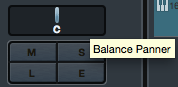
– a Stereo Balance Panner on the other Hand has only 1 Knob (as Logic)
– e.g. if you Pan with a True Stereo Panner Both Signals to the Left, you have Both Channels Panned to the Left (Left then Plays a Perfect Mono Signal Out of a Stereo Signal)
– but if you Pan with Stereo Balance Panner the Signal to the Left, you Only Get the Left Channel Out of the Speaker, this the Right Signal is No More Present at All (Logic has the Direction Mixer to Handle that)
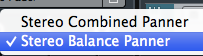
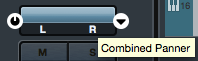
– Cubase has a Balance Panner (Default) or Optionally a Combined Panner so L/R Pans are Linked to Keep their Relative Positions
– e.g. can be used to Narrow Stereo Image and Re-Position the New Constraint together or Pan Both Channels Hard Left or Right to Sum to Mono (Summing to Mono this Way Increases the Level of course)



Inverted “Combined Panner”


Avoid Phase Flip for Fake Stereo
– Old Practice was to Flip the Phase of 1 Side (Polarity Reverse) to Create a Wide, but Diffused Pseudo-Stereo Image Out of a Mono Signal
– Normally a Mono Signal Coming from Both Sides of the Speakers, Vibrates in Tandem (i.e. Both Speakers Vibrate at the same Rate)
– but when you Flip the Phase of 1 Side, you Actually Reversing the Polarity of that Side of the Signal and the Speakers Drivers Move in the Opposite Direction
– this can be a Desired Effect and May Work in a Stereo Environment, but when you Switch to Mono the Equal and Opposite Signals Cancel Each other Out
– more Precise, a Strict Mono Source with a Phase Flip would Disappear if you Switch the Main Out to Mono, but a Stereo Source (as Long as it has Differences between L and R) would Not Disappear Completely but Lose Energy (i.e. Only Differences are Present)
Do Not Forget M/S
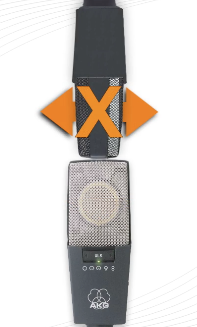
– “M/S” Stands for Mid / Side and is a Stereo Mic Recording Technique Invented for Stereo Recordings that would be 100% Compatible with Mono Playback
– but you can also Convert a Normal Stereo Recording to M/S after the Fact, either with a Plugin or via Routing
– the Idea is instead having L/R you have M/S where the M = Mono (Sum of L + R) whereas the S = is the Difference between Left and Right (i.e. L-R or Things in a Stereo Recording that are Not Common to Both Sides)
– a M/S Recording is Made by having 1 (usually Uni-Directional Mic) Pointed Straight at the Source to Pick it Up in Mono and another Bi-Directional Mic with its”= Side” Pointing at its Source which Runs through its Phase Matrix to Generate its Difference Signal
Avoid Pan Static
– Moving a Signal between Speakers can Distract the Focus on Other Elements and is certainly Not Suited for All Musical Styles
– but Panning can be Employed as an Effect as well to Add Motion to Elements
– Automate Pan Pots is One Simple Way
– Autopan Plugin Effects are another Common Way
Avoid let the Mix Get Off-Balance
– it is Crucial To have a Certain Symmetry in the Mix, i.e. Distribute the Energy Wisely so Not All Elements are Panned to the Same Spots and Not Being Heavy on 1 Side only
– Drum, Bass, Vocal often go to the Mid
– Mono Parts are Panned to the Sides between 60 – 85, Ideally with a Appropriate Part on the Other Side
– Appropriate in Terms of EQ Quality and Rhythmic Figure
– Doubling Tracks can be “Hard Panned” to 100
Leave a Reply