
Repetition
– Music Takes Place in Time, but Repetition Beguilingly Makes it Knowable in the Way of something Outside of Time
– thus Repetition Enables us to Look at a Passage as a Whole, even while it´s Progressing Moment by Moment
– A Different Way of Inhabiting a Passage, a Different Kind of Orientation
Critical Listening
– Hearing is more a Function whereas Listening is a Skill (and can be Developed)
– Notice that a Ear Damage will have the Consequence that may you Increase Level or Compensate in Frequency Spectrum to Match your Ears Reflex
– Take Frequent Breaks when Mixing to Refresh your Ears Muscle
– Active Listening is Crucial as it Tells you What Sounds you are Hearing and when they Do Occur
Breakdown of a Piece
Rhythm
– Organisation of Musical Events in Time
Dynamics
– the Variation of the Volume of a Sound
Pitch
– the Location of a Sound in a Scale
Frequency
– Rate at which a Sound Vibrates
Melody
– Pitched Sounds Arranged in Musical Time According to Custom
Harmony
– The Combining of Notes and Chords
Timbre
– Colour that which Distinguishes the Quality of Tone of a Sound, Instrument or Voice
Form
– The Constructive or Organising Element of Music
Tempo
– the Speed at which Music is Performed
Other
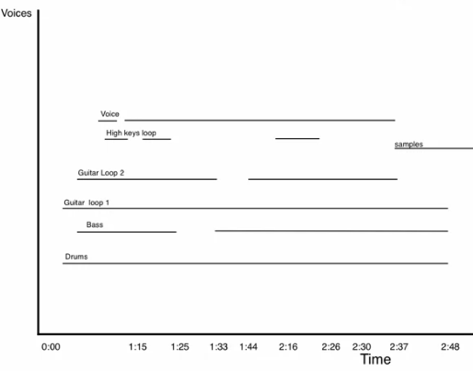
– Number of Instruments or Voices Present at any Given Time
– Time of Length
– it is a Good Practice to Create a “Song Chart” or Analyse a Track in a Spectrogram Analyser
– a Chart may Look Like this
Building Blocks of Music
Motif
– Short Musical Idea that might be Harmonic, Melodic, Rhythmic or a Combination of these
– Typically Made of Intervals, i.e. Series of Pitches and Rhythms
– Can Provide the Seed of which the Rest of the Composition may Grow
– often a Composer Evolves on a Response to the Basis Motif which is Called a “Countermotif”
Building Variations
– You need Variations of a Basis Motif Sequence to Make a Conversation between Pitches
– All of these Techniques can be Applied to Harmony as well, i.e. Set the Motif to a Series of Chords
– as you “Re-Order” just the same Content, the Colours Stay the same which Helps to Not Lose Yourself (but Happy Accidents are Welcome)
Examples (Single Pitches)
– This is Our Motif which Serves as the Basis Sequence
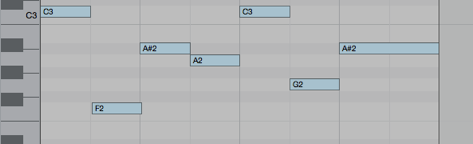
1) You can Copy the Sequence Over and Over to Make a “Exact Repetition”
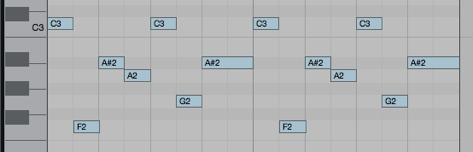
2) You can Copy the Same Basis Sequence to another Instrument, this is “Similar Motion”
– in this Case the Effect of 2 Voices is Lost and the Voices Sound Like 1 Voice
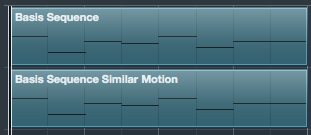
3) You can Transpose the Sequence, i.e. the Sequence Starts on a Higher or Lower Pitch (12 Possible Pitches)
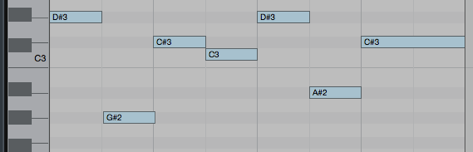
4) You can Invert the Sequence, i.e. the Sequence is Flipped Over which is Called an “Inversion”
– it is an “Exact Inversion” as it Does Not Follow the Key in which the Music is In
– Simply you Count How Many Pitches are between the Motif and Move in the Opposite Direction
– i.e. if a Note Goes Up by 7 Pitches you Write One that Goes Down by 7 Pitches
– i.e. if a Note Goes Down by 3 Pitches you Write One that Goes Down by 3 Pitches
Original
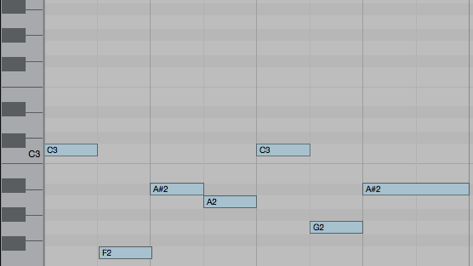
Exact Inversion
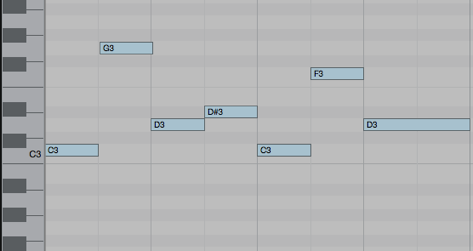
5) You can Create “Contrary Motion” by Playing the Inverted Sequence along the Basis Sequence
– in this Case you Hear Distinct 2 Voices, even if they are in the same Rhythmic Pattern
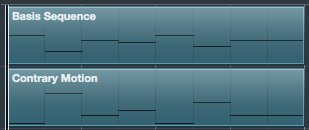
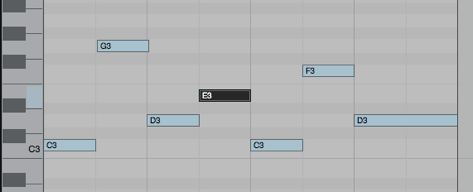
6) You can Make a “Tonal Inversion” where the Difference to the “Exact Inversion” is only that you Place the Flipped Notes to Match the Key in which the Music is in (usually the Next Nearest Position)
Original
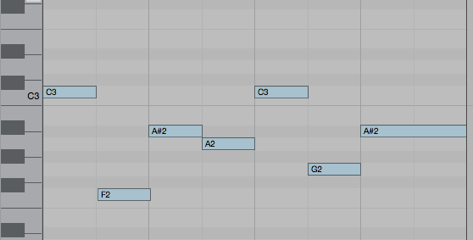
Tonal Inversion
– Taking Our Basis Sequence in F, you need to Correct the D# to either D or E to Match F Major (vs D# on a “Exact Inversion”)
7) Further you can you the “Slice to Audio” Feature many DAW Provide and Trigger the Slices then via Midi Notes
– allows to Re-Order a Basis Sequence to Create More Interest, even if it is the same Content
– Not necessarily Re-Order in Pitch
8) You can Copy the Sequence and Play it Backwards, this is a “Retrograde”
– Simply Turn Rhythm and Pitches Backwards, i.e. 1st Note is then the Last etc. (in Cubase “Mirror”)
Original
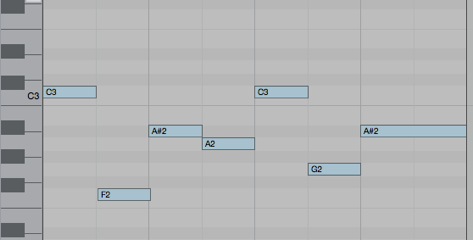
Retrograde
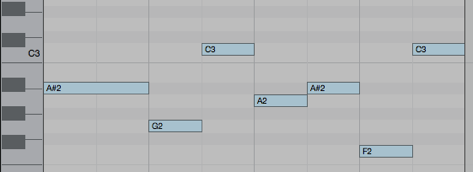
9) You can Change the Rhythm of the Basis Motif Sequence
– Half / Double Speed of Motif
– Create Finer Rhythmic Transformations
– Repeat Notes within the Motif
– Shift the Rhythm to Different Beats
Building Melodies
– Melodies can be Build Out of Motifs and their Variants
– when you Go trough your Motifs, Looks for Complement Shapes
– always Discover what you have Done so Far
Schönberg
– Melody Approaches a High Point or Climax through a Series of Intermediate Lesser Points, Interrupted by Recessions
– Upward Movements are Balanced by Downward Movements
– a Good Melody Generally Remains within a Reasonable Compass, Not Straying Too Far from a Central Range
Form (Content)
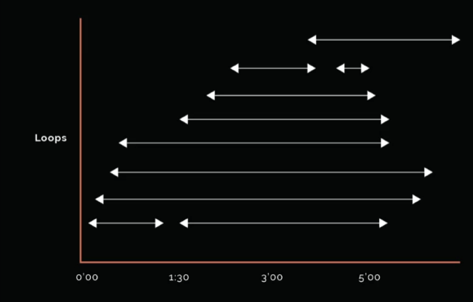
– Overall Form in a Piece of Music can be Made of Several Sections
– the Sections themselves can Repeat or Establish a Pattern, to Create the Overall Shape or Form of a Work
– here we have a Possible Form Made by 8 Sections of which 2 are Repeated Twice
Phasing
– when a Repetitive Rhythmic Phrase Played Back in Unison by 2 Voices at First, then 1 Voice will Gradually be Displaced by a Given Amount Over Time until they Meet up again at the Beginning
Phasing Example
– the Idea is to Simply Make a Copy from a Basic Phrase and then Copy the Copies Over and Over while Each has an Offset
– Pan the Original to the Left and the Gradual Copy to the Right to Hear the Effect better
– Make sure to Not Offset the Single Notes, but the Entire Clip (so All Notes Remain there and are Shifted without Leaving the Loop Boundaries)
1) Create a Basic Rhythmic Phrase (can be a Handclap)
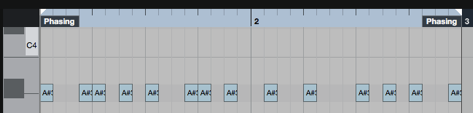
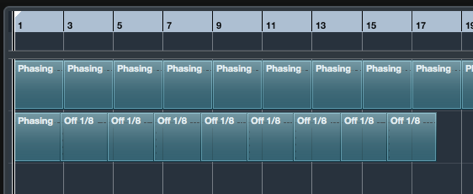
2) Copy Basic Rhythmic Phrase 16 Times in a Row

3) Create a New Instrument Track, Copy the Original Basic Phrase to to 1 1 1 1 for the First Copy
– i.e. Identical Position for the First Copy
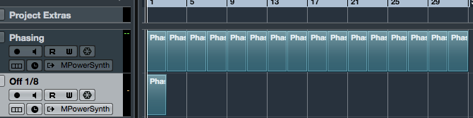
4) Now Copy the Original Basic Phrase to Create “Loop Offset 1” and Shift the Clip Backwards by 1/8
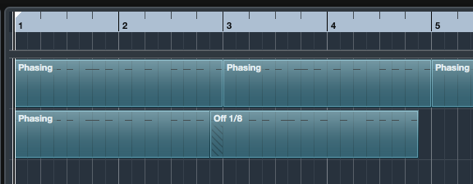
5) Copy the Loop Offset 1 to Create “Loop Offset 2” and Shift its Clip by 1/8 again
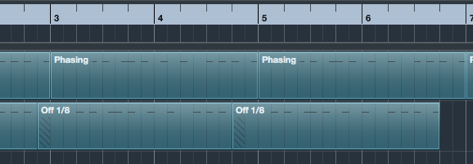
6) Copy the Loop Offset 2 to Create “Loop Offset 3” and Shift this Clip by 1/8 again
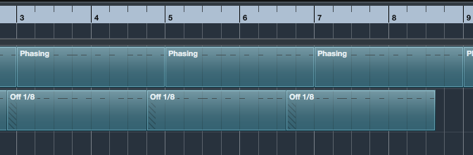
7) Continue this Exact same Procedure as Long as you Want and you will See and Hear that No Conversation between is Identical Original and Gradual Loop Offsets is the same
Harmony
– Harmony is the Simultaneously Combination of Tones in Music
– another Way to Keep Repetitive Music Alive is through Harmonic Change
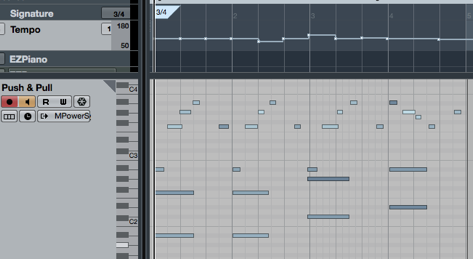
– Bach uses the Technique “Push & Pull” in his Prelude to Play with the Listeners Expectations
– i.e. Rhythmic Motif Stays the same but is Introduced at Slightly Different Tempos, Dynamics and with Change of Pitches / Harmony
– below is a Simple Example
Parallel Harmony
– All Pitches Move to the Same Pitches at the Same Time and Travel the Same Distance (Block Chord)
Voice Leading
– Of Course Not All Pitches have to Move in Blocks, so Voice Leading is a Technique to Minimise Movement between the Different Chords
– Done by Finding Common Pitches Shared by Each Chord and Moving the Other Voices to the Nearest Pitch of the Following Chord
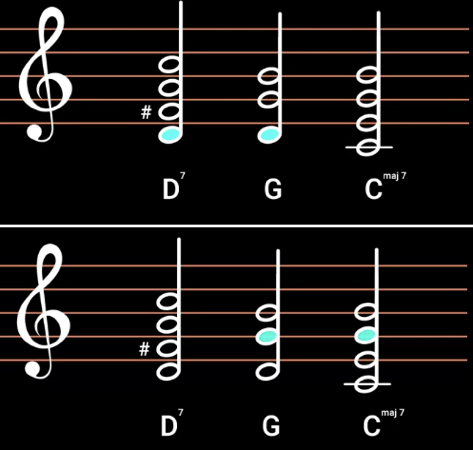
– it will be Easier to Perform and Creates a Sense of Continuity between the Harmonies
– the Same Technique can be Used with Samples, i.e. Play 3 Audio Clips and then Change 2 of the Clips to Create Something Else
– i.e. you Create Something Else but you also Generate an Expectation that the Original Set of Samples May Come Back
Terry Riley “In C” Case Studies
– we use “Bang on a Can All-Stars”
– it is a Series of 53 Musical Patterns Each Consisting of a Simple Melodic Line to be Played by an Unspecified Ensemble
– it is the “Instructions” that Provide a Real Interest
– the Patterns are Meant to Be Repeated in a Loop, any Number of Times
– Riley Asks the Ensemble to Work its Way through the 53 Patterns, but Each Performer is in Control of their Own Performance
– the Ensemble Plays together but they Do Not have to Play in Unison, he Only Asks the Performers to Listen to Each other to be sure Not to get Too Far Behind or Ahead of Everyone Else
– the Entries are Staggered, so you could have 2 People Playing the same Pattern but Beginning their Loop at Different Times
– the Ensemble Members can also Play Out of Sequence from Each other, Creating a Complex Assortment of Polyrhythms
– they can also Change the Octave of the Melody in Order to Create a Fuller Sound
– the Beauty is the Simplicity of its Make-Up and its Instructions and it Allows the Performers to Perform
– the Loops Comes Alive in their Hands, No 2 Performances are Alike and Yet the Piece Maintains the Same Character from Performance to Performance
What to Do when you Get Stuck
General
– some Methods for Getting the Music Flow
– often you Reach a Point when Composing and you Question Yourself Everything you have Done in a Weird Way
– i.e. you Listen to a Loop for Too Long or you have a Section that is Great for Opening but then there is a Void of what Comes Next
– the Best Way is Experience, i.e. the More you Compose the More you Know Methods of what can be Done
– Generate New Material Based on the Learned Techniques so Far (Change Motif, Pitch, Harmony, Rhythm Variations with Inversions, Retrograde etc.)
– Get Out of the Comfort Zone an Find a New Way to Look at your Music
– Listen Somewhere or with Somebody Else
– Extract the Best Parts Only
– but there Might be also a Point where you should Go for a Walk
– Brian Eno & Peter Smith = Oblique Strategies is a Fun Online Way that Generates Cards on what to Do
Contrasts
– Think in Terms of Contrast
– i.e. if Something Goes Up, try Following it with Something Going Down
– Follow Loud, Follow Soft
– Follow Busy Section wit a Sparse One
– Maybe Fast Needs to Follow Slow
– Listen to a New Contrast Long Enough before Continue
– Maybe Write Down what you Think of Each Combination
– Save Different DAW Versions
– Another Type of Contrast is to Repeat the Section as a Completely Transformed Version of the Original
– Try “Remixing” Yourself
– if you have Some Ideas for New Sections try Continue with an “Open Form” which Invites “Chance and Decision” Making that is Outside the Composers Control (e.g. Perhaps Making a Music “Mobile” where any Section could Appear after any other Section as the Way to Go)
– you can also Copy the Content Several Times to then Delete “Chunks” in Each Track at Random Time for New Ideas
– Automation is a Great Way to Create Variety
Constraints
– “Constraints” can Help Focus your Creative Energy on “Specifics”
– this Way you Do Not have to Worry about the Overwhelming Amount of Options available to you
– e.g. Limit the Number of Voices you use in the Composition, this Way you will be Forced to Make the Most Out of a Little
– Solution of “Limitation” Forces you to Work within a Simple Parameter Reduction
– if you have Very Active Material it will Help to Make a Piece more Approachable and at the same Time Expose Details that may have Cover Up by the Multitude of Voices
– the Other Benefit of Reduction is you will more Likely to choose the Voices that Work Best and be better able to Explain the Unique Qualities of that Instrument or Voice
Limit Your Tweaking
– “Limit Your Tweaking” is another Idea to Explore just 1 or 2 Parameters to Change
– e.g. Maybe Notes Begin Long bunt Slowly Shorten Over Time
– Perhaps High Notes are Always Long and Low Notes Short but they Swap Over Time
– Maybe the Entire Piece is an Exploration of a Nice Delay you Found
– Basically Find a Unique Creative Tool / Method and Evolve on that but Do Not Add anything more
Choose a Container
– Sometimes just the Use of a Form can Make All the Difference
– e.g. choose the Form of a Leave, Building, Bird Singing etc.
– Copy a Form from another Piece has been Done for Centuries
– i.e. Active Listening, Song Chart, Drop Audio to DAW, Markers on Changes
Leave a Reply