General
– Messiaen was Teacher for Harmony and Composition at Paris (Students Like Quincy Jones, Stockhausen, Pierre Boulez, George Benjamin)
– Messiaen Modes Provide a Huge Repertoire of Emotional Responses
– His “Modes of Limited Transposition” is a Set of Modes or Scales that Fit a Strict Set or Criteria Relating to Their Interval Groups
– the Messiaen Modes are Formed of Several Symmetrical Groups where the Last Note of Each Group always being Common with the First of the Following Group (thus Symmetrical / Repeatable)
– there are 2 Complementary Ways to View the Modes, Considering Their Possible Transpositions and Considering the Different Modes Contained within Them
– a Foundation for Symmetrical and Repeatable Scales that have Modes to Go with Them
– i.e. “Hybrid Scales” (and Different from Regular Modes)
– Messiaen had a Continuous Opposition between, What he Called “Masculine and Feminine Themes” which is a Musical Techniques he Often Used
– he was also into Indian Rhythms
– Because of the Symmetrical Construction, the Sound is Somewhat “Key-Less”, thus Opens the Door for a Variety of Interesting Sounds
– and Because the Modes are Somewhat “Key-Less”, they Provide Great Resources for Improvisation Over a More Simple / Defined Harmonic Structure
Set Theory & Modes of Limited Transposition
– Notice that you can Use the Set Theory and the Visual Clock Face to Check the Internal Relationship of Messiaen Modes
– e.g. Mode 3 (W 1/2 1/2 W 1/2 1/2 W 1/2 1/2) can be Looked at 0, 2, 3, 4, 6, 7 ,8, 10, 11
– 0 (Root C) , 1 (m2 Db), 2 (M2 D), 3 (m3 Eb), 4 (M3 E), 5 (4th F), 6 (Tritone Gb), 7 (5th G) , 8 (m6 Ab), 9 (M6 A), 10 (m7 Bb), 11 (M7 B)
– so Clock Face Shows Up in Semitones, means 1 = 1 Semitone and 9 = Semitones etc.
Principle Concepts
– Limited Transposition (Transpositional Symmetry)
– Inversional Symmetry
– Modes
– Truncations
– Cadences
Limited Transposition (Transpositional Symmetry)
– According to Messiaen, a Group of Notes Possesses the Quality of Limited Transposition if it has Fewer than 12´Unique Transpositions
– A Transposition is Considered as “Unique”, if it has at Least One PC (Pitch Class) that is Not in the Original Group
– Remember that the Term “Transposition” is Basically to Take a Song or a Group of Notes in Whatever Key its In and Put it In Any New Key in the Chromatic Scale
– so After a Certain Number of Chromatic Transpositions (an Depending on the Mode Pattern), the Notes Repeat and the Pattern is No More Transposable
– the Initial, Original Transposition is Always the 1st Available Transposition
– and the Initial, Original Mode is Always the 1st Available Mode
– Any of his Modes 1 to 7 Do Not Exceed 7 Transpositions
Example Building Transposition Inside Mode 2
– Remember, a Transposition is Considered as “Unique”, if it has at Least One PC (Pitch Class) that is Not in the Original Group
– also Remember that the Term “Transposition” is Basically to Take a Song or a Group of Notes in Whatever Key its In and Put it In Any New Key in the Chromatic Scale (i.e. Chromatic in Semitones)
– so you Shift Up by a Semitone in the Chromatic Scale to Determine Possible Transpositions, Until Cycles Closes and No New PC are Introduced
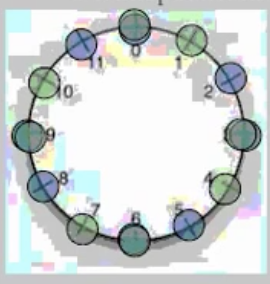
1) Mode 2 has Repeating Intervals Defined as 1/2, W, 1/2, W, 1/2, W, 1/2, W
– Mode 2 has 3 Available Transpositions
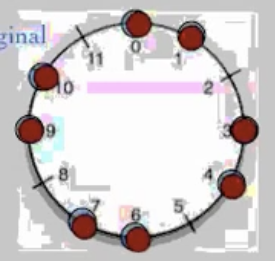
– this Picture Shows the “Transposition 1” (Original Position), i.e. Notes 0, 1, 3, 4, 6, 7, 9, 10
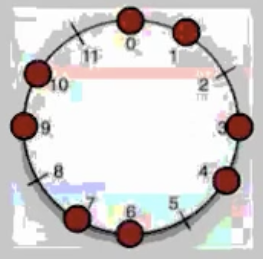
2) Go Up Clockwise a Semitone and and Check if there is a New PC (Not in the Original Group)
– i.e. Original is C, Db, Eb, E, Gb, G, A, Bb and Now we have Transposed Up a Semitone to Db, D, E, F, G, Ab, Bb, B
– so PC (Pitch Class) D and F are New and Not in the Original Group and therefore this is “Transposition 2”
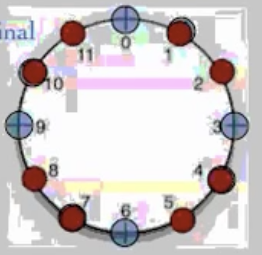
3) Go Up Clockwise a Semitone Again and Check if there is a New PC (Not in the Original Group)
– i.e. Original is C, Db, Eb, E, Gb, G, A, Bb and when Transposed 2 Semitones from C we Get D, Eb, F, Gb, Ab, A, C
– so PC (Pitch Class) D is New and Not in the Original Group and therefore this is “Transposition 3”
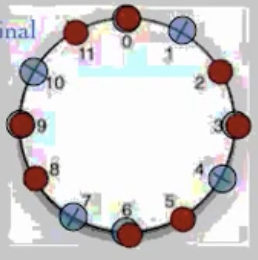
4) Consequently, Go Up Clockwise a Semitone Again and Check if there is a New PC (Not in the Original Group)
– i.e. Original is C, Db, Eb, E, Gb, G, A, Bb and when Transposed 3 Semitones from C we Get Eb, E, Gb, G, A, Bb, C, Db
– Same Notes as in Transposition 1, i.e. Cycles Closes and No New PC is Introduced
Inversional Symmetry
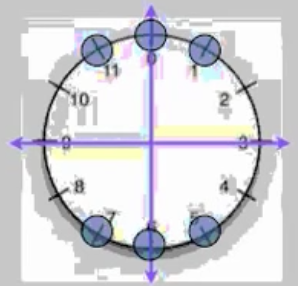
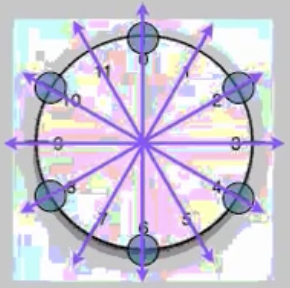
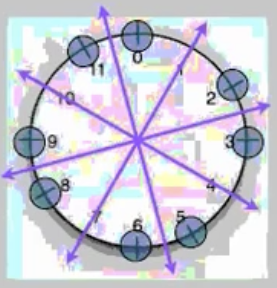
– if a Group of Notes has Inversional Symmetry, then a Line can be Drawn to Bisect the Clock Face in Such a Way that Each is a Mirror Image of the Other
– this Line is Called and “Inversion Axis”
Modes
– for Messiaen the Concept of a Mode is the Same as it is for Other Systems
– you Use the Same Order of Intervals but Start in a Different Place
– Remember that “Modes” Inside a Mode is Simply the Available Intervals Until they Repeat Again
– Any of his Modes 1 to 7 Do Not Exceed 5 Optional Modes
– Notice that Any Mode is Formed of Symmetrical Groups of Intervals (e.g. “Mode 1” = 1/2, M3, 1/2, 1/2, M3, 1/2), where the Last Note of Each Group is Always Being Common with the First of the Following Group
Example Building Modes Inside Mode 5
– you Shift the Starting Point Up of the 1st Interval by 1 Mode, so Often Until the Original Pattern Repeats
– i.e. What was 1/2, M3, 1/2, 1/2, M3, 1/2, is Then M3, 1/2, 1/2, M3, 1/2, 1/2
1) Here we have the Original Mode 5 which is a 6 Note Scale with Following Intervals
– 1/2, M3, 1/2, 1/2, M3, 1/2
– 0, 1, 5, 6, 7, 11 = C, Db, F, Gb, G, B
– Mode 5 has 3 Other Optional Modes
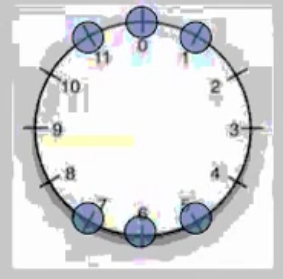
2) Mode 1 (Original) = 1 4 1 1 4 1 (Coming from 1/2, M3, 1/2, 1/2, M3, 1/2)
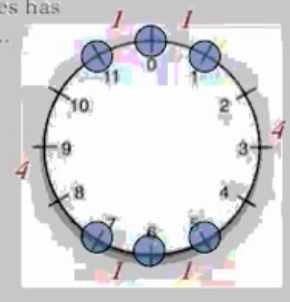
3) Now Shift the Start Point to Interval 2 to Reach Mode 2
– i.e. 4 1 1 4 1 1 (Coming from M3, 1/2, 1/2, M3, 1/2, 1/2)
– (Clock Face Picture Remains the Same)
4) Now Shift the Start Point to Interval 3 to Reach Mode 3
– i.e. 1 1 4 1 1 4 (Coming from 1/2, 1/2, M3, 1/2, 1/2, M3)
– (Clock Face Picture Remains the Same)
5) Consequently, when we Shift the Start Point Again we Match Original Mode Again
– i.e. 1 4 1 1 4 1 (Back to Original 1/2, M3, 1/2, 1/2, M3, 1/2)
– (Clock Face Picture Remains the Same)
Truncations
– for Messiaen, “Truncation” is the Process of Removing 2 or More Pitch Classes from the Group of Notes with Limited Transposition
– Such that you End Up with a Smaller Group that Still has the Property of Limited Transposition
– i.e. Removal of 2 or More Pitch Classes Results in a Pattern that Still has the Property of Limited Transposition
Cadences
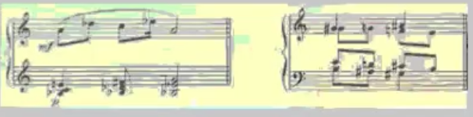
– Messiaen Gives Examples of What he Calls “Cadential Patterns”
– to his Ear these Patterns Serve the Same Function that Cadences inTonal Music Serve
– i.e. Creating a Sense of a Stopping Point, with Varying Levels of Conclusiveness
– to Properly Interpret Messiaen´s Music One Would Learn to Perceive these Patterns and Play them Accordingly
All 7 Messiaen Scales
Mode 1 = Whole Tone Scale
– 6 Note Scale
– a Symmetrical Scale that Repeats Every Whole Step = W, W, W, W, W, W
– e.g. C, D, E, Gb, Ab, Bb
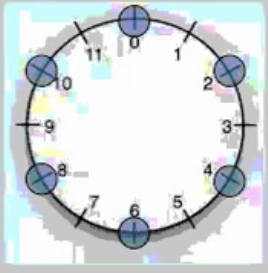
– 1 Mode = 2 2 2 2 2 2
– 2 Available Transpositions (Transposition 1 is Original)
Transposition 2
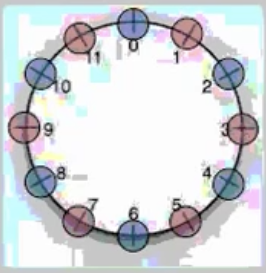
– i.e. the Only New Mode you can Explore is by Shift a Semitone Up from C to Db = 1 Mode (to Get the Db Whole Stone Scale with Db, Eb, F, G, A, B, C)
– Six Axes of Inversional Symmetry
– Harmonies with Perfect 5ths are Possible
– a Very Open & Dreamy Emotion that Results Out of a Whole Tone Scale
– but also Very Limited Over Time
– thus the Most Limited of All Limited Transposition Modes
Mode 2 = Octatonic Scale or 1/2 Whole Diminished Scale
– 8 Note Scale
– Alternating between 1/2 and Whole Step = 1/2, W, 1/2, W, 1/2, W, 1/2, W
– e.g. C, Db, Eb, E, Gb, G, A, Bb
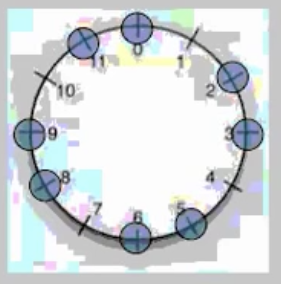
– 2 Modes = 1 2 1 2 1 2 1 2 or 2 1 2 1 2 1 2 1
– 3 Available Transpositions (Transposition 1 is Original)
Transposition 2
Transposition 3
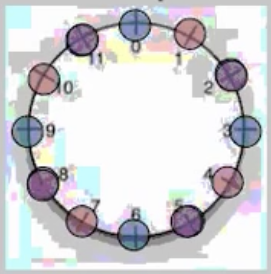
– the Scale Repeats Every Minor 3rd so you have the Root Position Mode and the 2 Modes In-Between
– means in C, an C Octatonic Scale is the Same as “Eb Octatonic Scale”, which is the Same as “F# Octatonic Scale”, which is the Same as A
– Four Axes of Inversional Symmetry
– Cadence Patterns
– Many Tertian Sonorities are Possible, e.g. F, Fm, F°, F°7, F7, F#°, F#7° etc.
– a More “Modern Classical Sound”
– also Very Open
– More Mystic and Less Dreamy
– John Coltrane Used this Scale
Mode 3 = Messiaen Custom Scale
– 9 Note Scale
– you can Look at it as a Split of 3 Equal Parts = W 1/2 1/2 W 1/2 1/2 W 1/2 1/2
– e.g. C, D, Eb, E, Gb, G, A, Ab, Bb, B
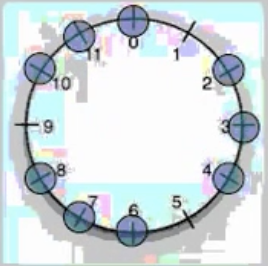
– 3 Possible M3 Inside the Octave, C, E and Ab
– where Each M3 also Gives Rise to the First 3 Notes of the Minor Scale (C, D Rise, Eb, E or E, Gb Rise, G, A or Ab, Bb Rise, B, C)
– 3 Modes = 2 1 1 2 1 1 2 1 1 or 1 1 2 1 1 2 1 1 2 or 1 2 1 1 2 1 1 2 1 (2 1 1 2 1 1 2 1 1 = Original Mode Again)
– there are 4 Available Transpositions
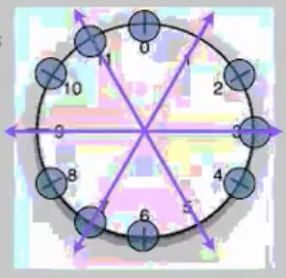
– Three Axes of Inversional Symmetry
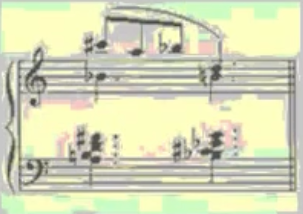
– 1 Possible Cadence
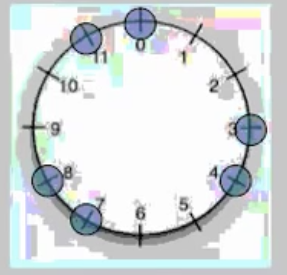
– Remember that Messiaen Defines “Truncation” as the Removal of 2 or More Pitch Classes that Result in a Pattern that Still has the Property of Limited Transposition
– e.g. if you Take Away these 3 PCs you Retain a Pattern that has Limited Transposition (in this Case the Result is a “Hexatonic Scale”)
– Lots of Tertian Chords
– Great for “Suspended Film Sound”
– a Lot of Tension
– Inspiring for New Material and Ideas
– also Very Open and Mystic as Well
– John Coltrane Used this Scale In Giant Steps with Focus on the Integrated Tetrachord 0, 1, 4, 6 (as 1 of the 3 Internal Modes), Available when you Play the Scale from the 2nd Degree which would be D when Root is C (as 1 of the 4 Available Transpositions in this Scale)
Mode 4 = Messiaen Custom Scale
– 9 Note Scale
– 1/2 Step and m3 Step Used = 1/2, 1/2, m3, 1/2, 1/2, 1/2, m3, 1/2
– e.g. C, Db, D, F, Gb, G, Ab, B
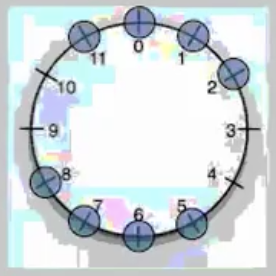
– 4 Modes = 1 1 3 1 1 1 3 1 or 1 3 1 1 1 3 1 1 or 3 1 1 1 3 1 1 or 1 1 1 3 1 1 3 (1 1 3 1 1 3 1 Back to Original)
– there are 6 Available Transpositions
– Similar to Mode 3, but More Information and Longer Pieces can be Written from that Mode
– Two Axes of Inversional Symmetry
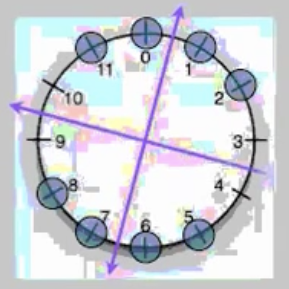
– the Only 2 Modes of Truncation Possible to Retain a Pattern that has Limited Transposition, i.e. these are the Only Truncations which have No Axis of Inversional Symmetry
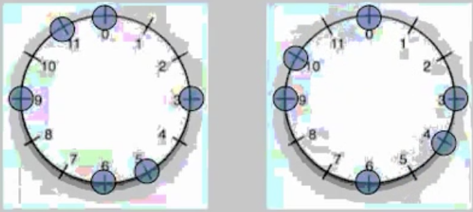
– Very Dramatic
– More Clustered Sound (as a Lot of Semitones are Used)
– a Little Sad (m3 Influence)
– More Closed Type of Sound than Modes 1,2,3
Mode 5 = Messiaen Custom Scale
– 6 Note Scale
– 1/2 Step and M3 Step Used = 1/2, M3, 1/2, 1/2, M3, 1/2
– e.g. C, Db, F, Gb, G, B
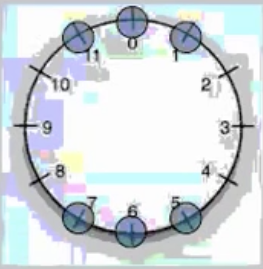
– 3 Modes 1 4 1 1 4 1 or 4 1 1 4 1 1 or 1 1 4 1 1 4 (1 4 1 1 4 1 Back to Original)
– there are 6 Available Transpositions
– Two Axes of Inversional Symmetry
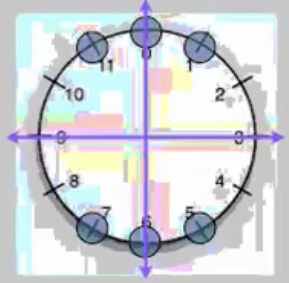
– an “Odd” and Open Mode in Terms of Harmony / Chords
– Fantasy Type
Mode 6 = Messiaen Custom Scale
– 8 Note Scale
– Whole Step and 1/2 Step = W, W, 1/2, 1/2, W, W, 1/2, 1/2
– e.g. C, D, E, F, F#, G#, A#, B
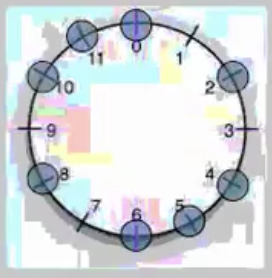
– 4 Modes 2 2 1 1 2 2 1 1 or 2 1 1 2 2 1 1 2 or 1 1 2 2 1 1 2 2 or 1 2 2 1 1 2 2 1 (2 2 1 1 2 2 1 1 Back to Original)
– there are 6 Available Transpositions
– Two Axes of Inversional Symmetry
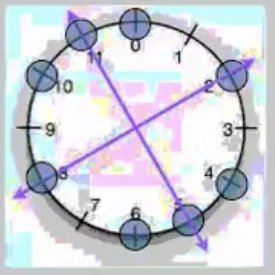
– Versus Mode 2 (which also Uses W & 1/2 Steps), Mode 6 has More of an Augmented Sound
– also Odd, but More “Cool” than Mode 5
– Open Stacked Type of Sound, but More Options for Color and More Interesting (8 Intervals to Play with)
– (a Favourite for Nature)
Mode 7 = Messiaen Custom Scale
– 10 Note Scale
– 1/2 Step & Whole Step Used = – 1/2, 1/2, 1/2, W, 1/2, 1/2 1/2, 1/2, W, 1/2
– e.g. C, Db, D, Eb, F, Gb, G, Ab, A, B
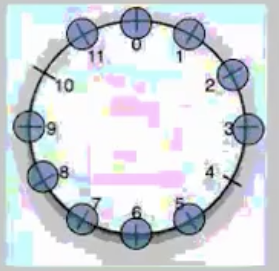
– 5 Modes
– there are 6 Available Transpositions
– Two Axes of Inversional Symmetry
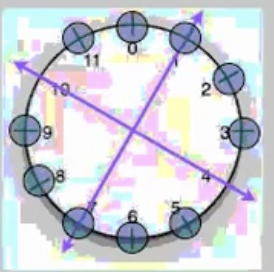
– Interestingly, in the Case of Mode 7, Any Truncation will Yield One of the Other Modes
Truncate PC 11 + 5 = Yield Mode 4
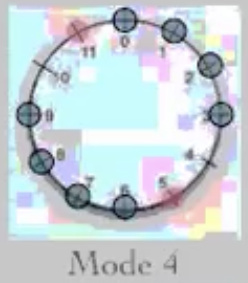
Truncate PC 0 + 6 = Yield Mode 6
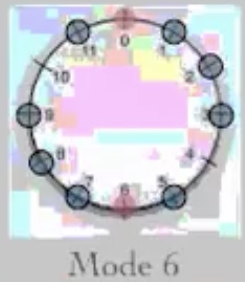
Truncate PC 1 + 7 = Yield Mode 2
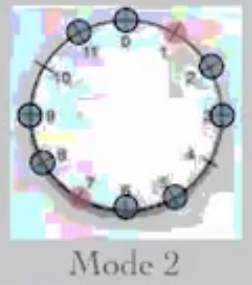
Truncate PC 2 + 8 = Yield Mode 6
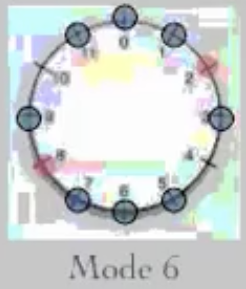
Truncate PC 3 + 9 = Yield Mode 4
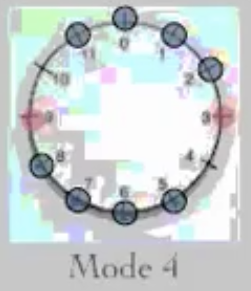
– Versus Mode 2 or 6 (which also Use W & 1/2 Steps), Mode 7 has More of an Clustered Sound as Even More Half Steps are Used
– Beside the Cluster and Dissonance Options, you can Extract Great Open Sounds as Well
– Provides a Very Broad Emotional Repertoire (Sad to Happy)
– (a Favourite for or Everything)
Example Building 3rd Mode Limited Transposition
– Last Note of Each Group always being Common with the First of the Following Group
1) The Octave is Split into 3 Parts, so you get 3 Parts that have each the Distance of Major 3rds
C to E (C, Db, D, Eb, E is the Last Note of this Group and First of Following Group)
E to Ab (E, F, Gb, G, Ab is the Last Note of this Group and First of Following Group)
Ab to C (Ab, A, Bb, B, C is the End and No Longer Transposable, giving the Exactly same Notes as the First)
2) Now each Split can be Used to Rise only to the Minor 3rds (just before the Major 3rd)
C, D, Eb
E, Gb, G
Ab, Bb, B
3) This 3rd Mode Scale allows for all the Classic Major 7, Dominant 7, Minor 7 or Half Diminished Chords
4) But it also Contains 4 Note Chords that Contains all 2 Note Chords
5) Means for Example 0, 1, 4, 6 is such a 4 Note Chord which is C, Db, E, Gb and this Holds all the 2 Note Chords as follows:
C to Db Holds the m2nd,
E to G Holds the M2nd,
Db to E Holds the m3rd,
C to E Golds the M3rd
Db to Gb Holds the 4th
C to Gb Holds the Augm4th (Tritone)
Now Invert the Chord a Couple of Times to get the other Ones (5th, m6, M6, m7, M7)
Analyze Piano Part “Quartet for the End of Time”
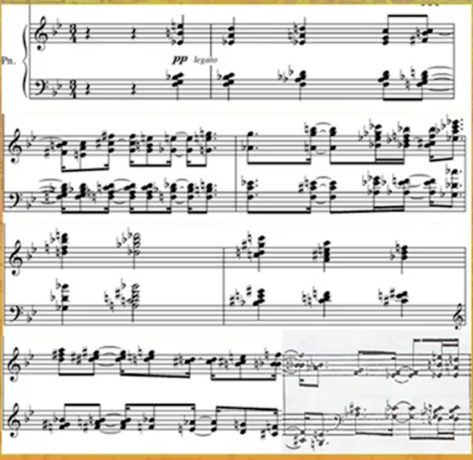
– “Liturgie de Cristal” = 1st Movement and uses Primes 17 + 29
– the Piece is for a Quartet, but it is in the Piano Part where an Incredible Structure in the Harmonic Sequence is Composed
– Piano Part has a 17 Note Rhythm Sequence and Repeats Over and Over Again in this 1st Movement
– whereas the Harmonic Sequence is a Sequence of 29 Chords
– Messiaen Used Mathematics
– 17 + 29 are Both Indivisible “Prime Numbers” and Create a Never-Ending Pattern Together (Sense of Un-Ease)
– i.e. when the Rhythmic Sequence has Finished After 17 Notes, the Harmonic Sequence is Still Working its Way through its Total of 29 Chords
– Consequently, when the Harmonic Sequence has Finished After 29 Chords, the Rhythmic Sequence is at a Total Different Place
– this Effect of 17 vs 29 Keep the Rhythm and Harmony Out of Sync (Until they Meet Each Other at Original Position which is 17 x 29 Later = 493
– you can Not Hear the Primes as Such in the Piece, but you Do Get a Sense of Structure
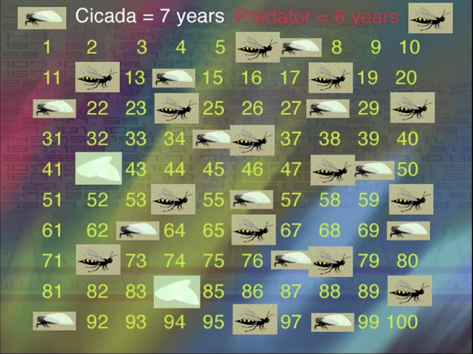
– Nature is Full of Such Life-Cycles, e.g. Take a Cicada that Comes Every 9th Year and its Predator Every 6th Year
– Both, 9 + 6 are Divisible by 3, so the Cicada and the Predator Meet Quite Quickly
– the Cicada Emerges at Numbers that are also Divisible by 6, e.g. at 9 + 6, i.e. 18, 36, 54, 72, 90
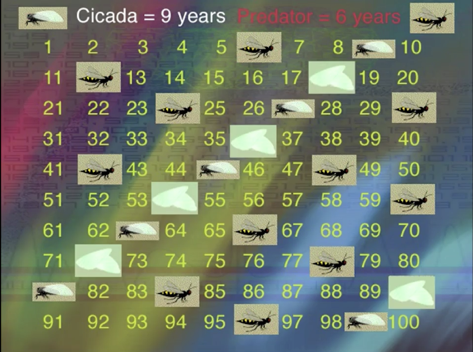
– but if you Increase the Life-Cycles of the Cicada to 7 Years (Instead 6), you Put Them Out of Sync
– i.e. the Cicada has More Chance to Live
– it Takes 42 (7 x 6) that the Predator and Cicada Fall into Step
– so you can Look at the Predator Like the Rhythm Sequence and the Cicada as the Harmonic Sequence
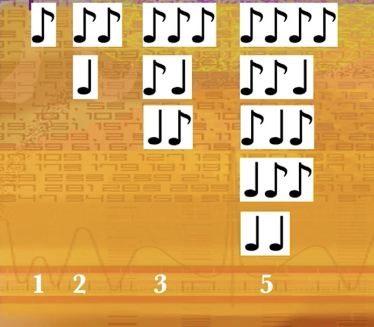
– also Remember the Fibonacci Numbers that Give the Answer to the Question ”How Many Rhythms can you Create with Longs and Short Beats?” (a Long Beat is Twice as Short Beat)
– e.g. How Many Rhythms can you Make with 4 Beats in a Bar
Leave a Reply