
- Levels of Audio can be Broken into 2 Distinctive Components
- 1 = Momentary Transient Peaks, i.e. Instantaneous Impact at the Beginning of a Percussive Sound, Typically Short from 10ms to 20ms (a 1000 of a Second), Peak Level, About 10dB to 20dB Louder than the Average Level
- 2 = More Continuous Sustaining Portion of a Sound, Either Sustains or Rings Out and Gradually Dies Away, Average Level
- Human Hearing can Catch the Average Level, but Not the Level of Peaks as they are Too Short to Perceive Actual Loudness
- Modern Level Meter Tools Allow you to Visualise the Volume of Both of these 2 Distinctive Components (Peak+RMS of a Sound), i.e. Show Potential Distortion / Reference Overloads in Different Colors
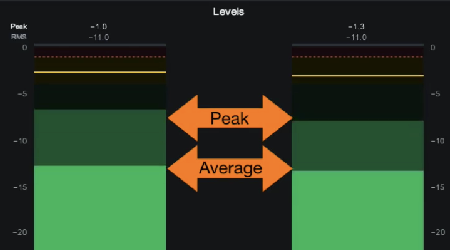
- Notice that the Modern Peak Meter in a DAW (i.e. NLE Editor) is Always Clean, i.e. Whether Signal is at -30 or at “Zero” (Zero References to “0 dBFS = Full Scale), but Above 0 dBFS Digital Distortion Occurs
- while the “Zero” in a Average Level Meter (i.e. RMS Based Analog VU Meter) is the Reference at which the Signal is The Cleanest, Above Zero a Signal Gradually Drives into Analog Distortion
Leave a Reply