
General
– as we Know, Counterpoint is the Play of 2 or More “Voices” Against One Another and a Fugue is a Structure Built from that Technique (Voices = Lines of Music, Such as Melody)
– so Fugue (as the Canon is), is Contrapuntal Compositional Technique or Texture that Employs a Melody with One or More Imitations of the Melody and Together Form Harmonic Structure
– Most Complex Polyphonic Form, Involving “Imitation” Among All Voices (Parts)
– Fuga = Chase (Since Each Voices “Chases” the Previous One
– in General with 4 or More Voices
– Fugue is Generally a Longer Composition that has More Structure in its Whole (Not Short Melodic Lines as in a Canon)
– it is Divided into “Sections” and is Less Strict in Terms of Imitations (Not Strict Imitations as in a Canon)
– as in a Canon, in a Fugue there is a Main Melody that is Repeated Over and Over, which is Called “Subject” (Usually Across Composition in Different Voices)
– the Main Difference is that a Melodic Line can be Changed into Another Melodic Line, Often Appearing in 2 Different Keys
– when the Subject Changes to a Different Key, it Becomes the “Answer”
– Fugues Differ in How Many Voices are Used, as Well as the Order in which they Enter
– Composers use “Forms” Such as a Fugue in the Same Way as Others Rely on Presets, Methods and Structures to Organise Ideas
– a Fugue Answer is Generally in the Dominant (i.e. can Not be an Exact Transposition of the Fugal Subject and therefore Not Strictly Canonic)
– in General Subject and Answer Alternates Between Tonic and Dominant Key (e.g. 1st Voice Enters in C Major and the 2nd Voice Enters with a Subject in G Major)
– also the Countersubject of a Fugue is Not Normally Treated Canonically (Would be Impossible to Do so)
– Fugues have Sections of Free Counterpoint which are Often Not Even Imitative, Let Alone Canonic
Example Fugue Hierarchy
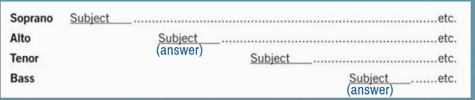
1) Soprano = Starts the Original “Subject”
2) Alto = Enters at a Different Time with an “Answer” to the Soprano (Different Key)
– the Soprano Still Continues in Counterpoint with the Alto, Creating Polyphony
3) Tenor = Enters at a Different Time with the Original “Subject” Again
– Now there are 3 Independent Melodies Create More Harmonic Possibilities (Chords)
4) Bass = Enters at a Different Time with an “Answer” to the Tenor (Different Key or Pedal Bass)
– Now there are 4 Independent Melodic Lines (Voices) a Composer can Utilise
5) When All Voices have Entered, it is Called the “Exposition”
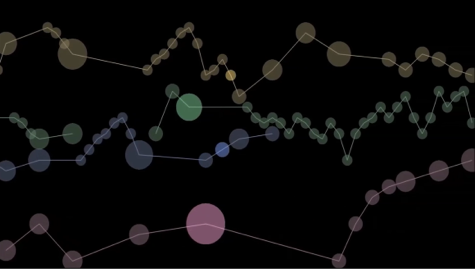
6) What Follows can Vary, Usually a Section where Either the Subject or New Contrasting Material is Developed Using Counterpoint or Other Techniques
7) Such a “Sections” are Called “Development Episodes” and are Passages in the Development that Use the Subject or Other Ideas in New and Interesting Ways
– e.g. the Subject Inverted, Backwards or Augmented etc. to Squeeze More Possibilities Out of the Subject (but Variations of the Initial Subject are Less Often than in Canons)
Leave a Reply