General
– Some Aspects to Create Depth in a Mix and how to Put Parts Occur on the Front or to the Back
– Remember to Think about the Microphone Recording Distance, i.e. Record a Sound with Body (Close Mic Distance) or without Body (Far Mic Distance)
– a Thunder is Much Closer if you can Hear its High Content (Air Filters High Frequencies the Longer the Sound is Traveling)
– another Fact is the Existing Room of a Particular Signal, i.e. a Signal Source in a Large Factory Room which is Closer to us has more Dry Signal (Direct), but the same Signal at the End of the Factory Room gives us a far more Wet Signal
– it is Crucial to have a “Reference”, i.e. what Sound is the “Zero Point” in your Mix thus to Start from that “Zero Point” to Build the Depth of Field
- in Practice, it is useful to Start with the Most Important Sound as the “Reference Sound”, then Decide if the Next Sound should Come before or after the Previous Sound (and so on)
General Approach Overview
– General Approach is to use Level, EQ and Reverb to Define the Depth of an Image
Level
– Things that are Louder are Perceived as Being Closer to us
EQ
– High Frequencies Damp Out Faster Over Distance
– i.e. Things that are Bright are Perceived as Being Closer to us
– Low Frequencies Damp Out Slower Over Distance
– i.e. Things that are “Damped” are Perceived as Being Further Away from us
Reverb
– Mainly Early Reflections, Late Reflections and Pre-Delay Determine the 3D Space Character
– Basically there is a Source Sound Wave that Goes Out and Builds an Initial Reverberation at a First Boundary (ER), then Comes Back (Pre Delay = Time between Source, the First Boundary and Source Again) and Finally Reflections that Go Out Collide with Reflections that Come Back to Form the Late Reflections (LR)
Early Reflections
– are the First Order Reflections that Happen in a Space
– i.e. a Sound Wave Goes Out, Hits a Boundary and Comes Back
– the Closer we are to a Source, we Hear More of the ER (Early Reflections) and Less of the LR (Late Reflections)
Late Reflections
– a Sound Wave Goes Out, Hits Different Boundaries in Different Ways (i.e. Bounces Around a Room) Before it Comes Back
– the Further Away from a Source we are, we Hear More of the LR (Late Reflections) but Less of the ER (Early Reflections)
Pre-Delay
– the Closer we are to a Source, we Do Not Hear any Reverberation until the Sound Travels Out then Bounces Back and this Time in-between is the Pre Delay Time
– e.g. if you are 5 Feet Away from the Nearest Boundary you get Approximately 10ms Before the First Reflections get Back to you
- as we Go Further Away, the Pre-Delay Goes Down
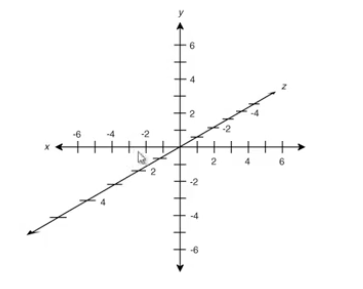
3 Dimensions
– we have 3 Ways to Influence the Source of a Signal in Terms of “Back” or “Front”
1) Horizontal (X-Axis) = Left to Right Planar
– Standard Left to Right Panning of Sounds
2) Vertical (Y-Axis) = Frequency Planar
– the Location is Based on the Frequency of a given Sound
– e.g. a Kick is naturally on the Bottom Side of the Frequency Planar (0 to -6), whereas a Hi Hat Sits more on the Top Side of the Frequency Planar (0 to +6)
3) Depth (Z-Axis) = Depth Planar
– this is the Way to Place Sounds “in a Row”, one after the other
– often Measured in Meters, similar to Simulating a Depth of Field in 3D
Bring Sounds to the Front
– to be in the Front of the Reference “Zero Point”
– “Front” means Louder, Bigger, More High Frequency Content, Dry, Wider
– the Louder a Signal is, the Closer it Sounds, so one simple Way is to Make the Sound Louder than the “Reference One” (if you Intend to Bring it to the Front)
– you can also Enhance Low and High Frequencies with an EQ, if you Intend to Put the Sound in Front of the Reference Zero Point
– another Way is to Spread a Signal in the Stereo Field, means to Enhance a Sounds Width can make it Sound more on the Front (i.e. Push it away from Just the Middle of 2 Speakers)
Push Sounds to the Back
– to be in the Back of the Reference “Zero Point”
– “Back” means Quieter, Smaller, Less High Frequency Content, Wet, Narrow
– the Quieter a Signal is, the more Far Away it Sounds so one simple Way is to Make the Sound Quieter than the “Reference One” (if you Intend to Bring it to the Back)
– as we also Know, Adding a Reverb to a Sound Pushes the Signal Back (use the Specific Reverb Instance to Define the Distance e.g. Distance in Meters, Cubic Meters (of a Specific Room) or Milliseconds)
– another Simple Way is to take Away High and Low Frequencies, which Pushes the Signal also to the Back as well
Leave a Reply