
- with Analog Equipment or Plugins that Emulate Analog Equipment You Should Take Care About the Right Input Signal
- i.e. in Analog Environment to Avoid Record into Noise Floor and Later Bring Up that Noise Floor or Avoid to Clip the Signal
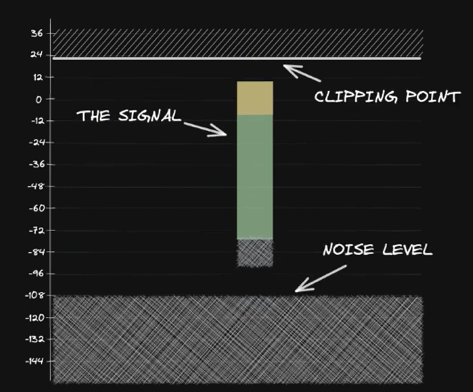
- in Order to Make Each Hardware Processor Work Transparent there is a Nominal Level which is +4dBu and is Called “Line Level”
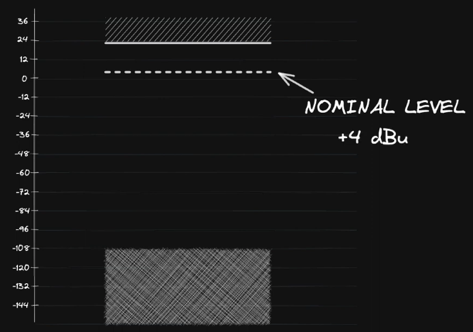
- and Since a Microphone has a Much Weaker Signal Use a Pre Amp to Bring the Signal Up to the “Line Level”
- in Analog They Measured in VU and the VU Meter Shows the +4dBu Line Level as Zero
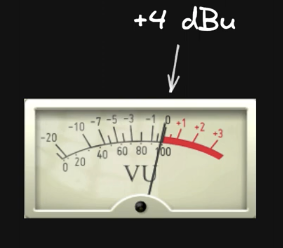
- with Plugins that Emulate Analog Equipment you Should Follow the Same Steps and Bring the Signal to About +4dBu which is the Same as -18dBFS (or LUFS) in the Digital Domain
- i.e. Keep Signal at Unity Gain (-18dBFS) for Every Plugin you Enter and Only at After Limiter Stage you Raise the Signal to the Maximum 0dBFS (or -1dBFS)
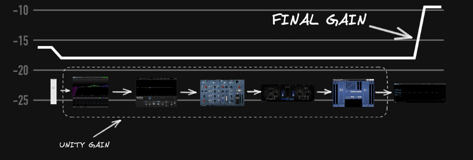
- Notice that there are also Plugins that Benefit of Driving the Input Higher to Get the Entire Mojo, i.e. Mostly Plugins that Rely on Soft Clipping Such and Emulate Tubes and Transformers
- the Final Thing is “Peak”, i.e. there is a Average Level and a Peak Level and Between there is the so Called “Crest Factor”, a “Crest Factor” of 15 is a Good Spot and therefore the -14 Target Level is a Overall Accepted Target to Master Your Song for Streaming Services
- People Still Make Louder Masters than -14 They Aim for a Smaller “Crest Factor” via Peak Limiting, then the Best is to Address the Peaks Before the Limiter so the Limiter Works Cleaner and Makes it Easier to Aim Even a “Crest Factor” (or Loudness) of -5, in the Analog Domain this was Often Done by Clipping the AD Converter (Technically Wrong but was the Best Way to Get Louder Masters)
- be Aware of Phase Shifts After Clipping / Limiting, i.e. Do the Clipping at the Very End of the Chain Right Before the Limiter
Leave a Reply