General
– when Sound-Waves Meet a Room Boundary (such as a Wall), 3 Things Happen
– Sound-Wave will be Absorbed, Transmitted or Reflected
Absorbed
– Waves Lose Energy, typically at Higher Frequencies
– a Proper Absorption is Good, but Too Much Absorbers can Deaden the Space
Transmitted
– the Waves Pass Through a Room Boundary by Inducing Vibration in it, Transmits even to the Adjacent Space
– this can Lead to Leakage Problems if Sound Waves also Come from another Room and Pass through the Wall (i.e. Waves from 2 Different Sources Collide)
Reflected
– Sound Being Reflected from Room Boundaries
– Most Common Issue on Production Spaces
– the Problem is that Sound Waves Hit Surfaces and Bounce Back Introduce “Phase Interference” when they Meet up at other Waves
– All Frequencies are Affected, Causing “Cancellation & Reinforcement” when Traveling
– this can Change the Balance of Harmonics and Overtones of the Musical Sounds, Altering the Tonality of everything you Hear in that Space what is Known as “Comb-Filtering”
– Worst Case are “Flutter Echoes” that can Occurs by Strong Reflections between Parallel Surfaces
– Mid & High Frequencies can be Controlled with Absorptive Phone Panels
– a Simple but Effective Way to Find and Absorb Places with “Strong Reflections” is to Walk Along the Walls with a Mirror Pointing Inside the Room and when the Person Sitting at the Sweet Spot i Seeing his Now Speakers in the Mirror you can Detect Reflections Since Light Waves Reflect just Like Sound Waves
Room Modes
– Low Frequencies are Probably the Biggest Problem in a Smaller Space
– Main Problem are “Standing Waves”, aka “Room Modes” as a Result from “Phase Interference” by Low Frequencies
– the Difference is that Mid / High “Phase Interference” Waves are “Short” (Typically Less than a Foot and as Little as Inches), i.e. these will Mostly be Dispersed throughout the Room
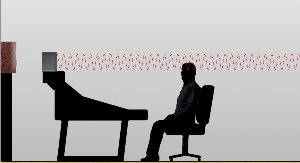
– but Low “Phase Interference” Waves are Long, often Long as or even Longer than Room Dimensions (especially in Smaller Rooms)
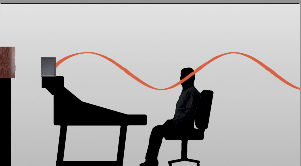
– when the Waves Lengths of Certain Frequencies are Multiples of the Various Room Dimensions (Height, Width and Depth), then the “Phase Interference” that Occurs is Not Dispersed throughout the Room
– this Issue Leads to “Standing Waves” or “Room Modes” as the Waves Travel a Long Time Back and Forth between Floor/Ceiling and/or Walls and have Time to Sit somewhere
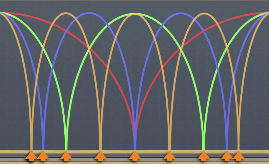
– these Low Frequencies are Typically Below 200Hz to 300Hz and because they “Stand Still” at Specific at Places, they will be either Not available to the Listener at the Sweet Spot Due to “Cancellation” or will be Emphasised to the Listener at the Sweet Spot “Reinforcement”
Cancellation
Reinforcement
Leave a Reply