
General
– E (6th String) – A – D – G – B – E (1st String)
– on a Chord Diagram, Tip Finger is 1, Middle Finger is Position 2, Ring Finger is Position 3
Acoustic Guitar
Soundbody –> Performs the Soundchamber that Creates the Guitars Tone
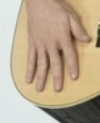
Soundhole –> Sound Projects from the Body

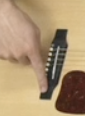
Bridge –> Anchors the Strings to the Body
Neck of the Guitar

Fretboard (or Fingerboard) is the Playing Surface where you Press Fingers to Play Notes
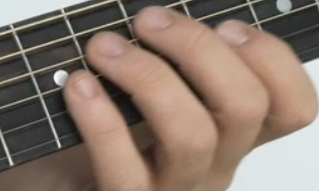
Frets –> Metals-Trips along Fingerboard
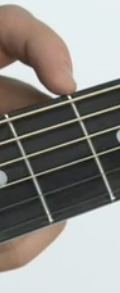
Nut –> the Grooves-Trip at the End of the Neck (keeps Strings in Place)
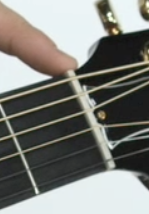
Head –> Holds the Tuning Pegs to Tune the Guitar

Electric Guitar
– same as Acoustic Guitar but it has No Soundbody and Soundhole
– therefore No Hall or Chambers to Resonate and the Guitar is Quiet Compared to Acoustic Guitar
– Body is a Called a Solid Body
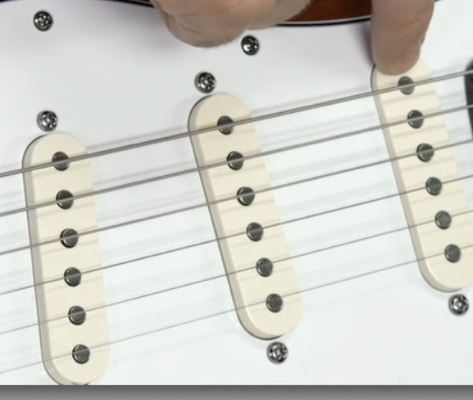
– so Pick Ups are Used (Minimum 1) to Capture the Sound to Make Louder
– this Example Picture has 3 Pick ups (mine only 2)
Tuning Process
– Turn Pegs just a little to Loosen String and then Tune
– Strings Go from Thick to Thin
– Thick is the Lowest 1st String, also called the Low E-String and the Highest 6th String the High E-String
– A is the 2nd String, D is the 3rd String, G is the 4th String, B is the 5th String
1) Pluck the Strings with the Thumb to Tune
2) Start from 6th String (Low E) all the Way to the 1st String (High E)
3) Since Tightening or Loosening Strings may affect the other Strings Tuning, Repeat the Tuning
Read Guitar Chord Diagrams
– If you Face the Front of the Guitar towards you, this is How Diagrams are Mapped
– the 6 Vertical Lines of a Diagram show the 6 Strings from Left (Low E) to the Right (High E)
– the 6 Horizontal Lines Represent the Frets with the Thick Line on the Top Showing the Nut

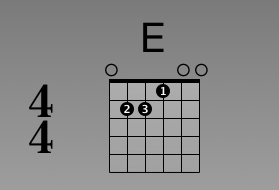
– we use “Dots” to Illustrate a given Chord on Diagram, so the E Major Chord on a Digram looks like this…
3rd String at Fret 1, 4th String at Fret 2, 5th String at Fret 2

– to Know which Finger is used to Press Strings a Number is Shown on Dots
Tip Finger is 1
Middle Finger is 2
Ring Finger is 3
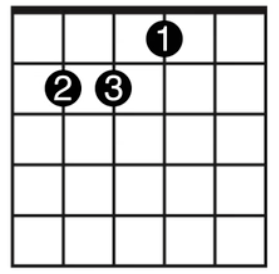
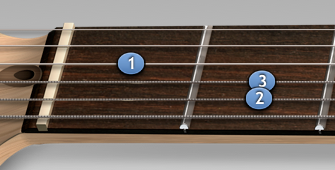
– if there is a “O” on Top of the Diagram, this String is Played in Open Position, which means you Do Not Press a Fret for that String
– if there is a “X” on Top of the Diagram, this String is Not Played at all
– Letters on Top Show the Key
Frequency Range Per String
– the Last String is the One after the Last White Dot
String 1 = E4 329 Hz to D5 1174 Hz
String 2 = B3 246 Hz to A5 880 Hz
String 3 = G3 195 Hz to F5 698 Hz
String 4 = D3 146 Hz to D5 523 Hz
String 5 = A4 110 Hz to G4 391 Hz
String 6 = E2 82 Hz to D4 293 Hz
Leave a Reply