
– Compress Vocals Enough and with the Right Attack Times, you can Cumulative Compress Vocals 20dB, Mainly Inside 0ms to 20ms (or 30ms), Use First Compressor that Handles the First 0.5ms and then Second Compressor that Handles Everything After 0.5ms to 20ms
– De-Ess Vocals Enough Good, i.e. Avoid Sibilances to Pop Out at Times and Control Them
– Use Vocal De-Esser at the End of the Chain, or Maybe 2nd Last if You Want to Enhance the Highs with an EQ / Saturator After De-Esser
– Often Vocal are Too Boomy or Muddy Between 100Hz and 300Hz, Make Bell or Shelf Cuts
– when Mixing, Always Listen to the Previous Mixed Element when Adding New Elements, e.g. You Start Mix the Kick then Add Volume of the Snare but Listen to the Kick and Make Sure the Kick Stays Completely in Its Place While Adding the Snare, and then e.g. Add Bass but Again Listen to Kick and Snare while Adding the Bass, Reason is if You Only Listen to the New Element You Bring In You Make it Inherently Too Loud while with Above Method You Create a Balanced and Dynamic Mix
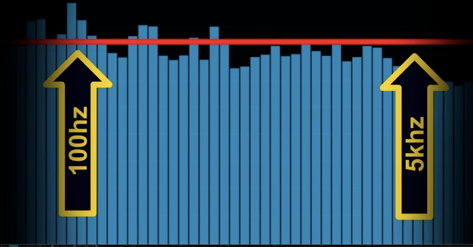
- Each Frequency Should be Represented in a Good Mix, i.e. Try a 3rd Octave Analyzer in Pink Noise Mode -> then Concentrate on Everything Between 100Hz and 5kHz (Range May Vary Between Genres) -> Check that Every 3rd Octave Bar is Quasi Touching the Top Line
– Optimally a Song Sounds Loud but also Feels Dynamic
- ADAM Speakers Tend to be on the Darker and More Full Bodies Side, i.e. this can Help Engineers Who Mix a Bit Dark Add Some Clarity and Sparkle to their Tracks, but Notice that this May lead to Larger than Expected Boosts in the Upper Reaches of the High-End (Where the ADAM Ribbon Tweeters Feel Especially Smooth and Subdued
– If you Mix in a Particularly “Live” or Untreated Room you are Likely to Wind Up with Darker Mixes than you Intend as you Subconsciously Try to EQ Out the Flutter Echo, “Zinginess” and High Frequency Reflections Prevalent in Your Space (which is Especially Common in Spaces that are Light on Absorption)
- in General, De-Ess High End Precisely and then Boost the High End Overall (i.e. Compress and then De-Ess)
– Real Width Comes Especially from 2 Instruments that Play Opposing Rhythms and then Pan Them Hard Left / Right (be it Keyboards, Guitars, Percussion, Voices, Strings Stabs etc.), to Add on that it is Even Better when the 2 Opposing Instruments have Slightly Contrasting Tones (e.g. Instrument 1 = Dominant 400Hz to 1kHz and Instrument 2 = Dominant 1kHz to 2.5kHz)
– to Bake Plenty of Depth in the Mix, Realize that Not Every Sound Should Feel Like It is Glued to the Front Edge of the Speakers, i.e. when Every Sound is Up-Front Nothing Gets to the Master Stage
- Again, It Does Not Matter What Any Instrument Sounds Like in Solo, It Does Matter What Things Sound Like in Context, i.e. Do Not Correct / Judge with an Instrument Listen in Solo
- when Everything is Listened (and Coming) Out of 2 Speakers it Makes it Difficult to Mix / Place e.g. a Boomy Bass + Boomy Kick + Boomy Piano, Whereas when those 3 Sounds Coming from a Stage Our Brain / Ear can Distinguish the Placement of All 3, to Fix Spectral Balance of the Boomy Bass + Boomy Kick + Boomy Piano we Need to EQ Each
– To Mimic (or Restore) a Good Vocal Mics Proximity Effect Boost a Little at 100Hz and Cut Harshness Around 2kHz and Muddiness at Around 500Hz
– Often Harsh / Resonating Frequencies on a Guitar or Guitar Stack are Around 3100Hz
- Move Fast and Know your Arsenal
- Make a Favorite Plugin Folder and Use these
- Group Things Together Before Mixing
Leave a Reply