
General
– Adding Extended Notes to a Basic Triad Makes No Difference to whether it´s a Major or Minor Chord, i.e. the Triad Below Still Defines the Type of Chord
– when you Move Key, Ideally Move Up Not Down to Keep Energy (in Trip Hop you often Move Down)
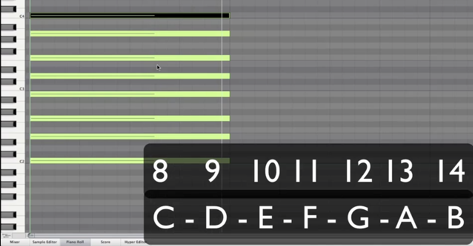
– try to think also in Numbers (1,3,5,7 and 9) within the scales and the numbers if starting from a F like Pic below
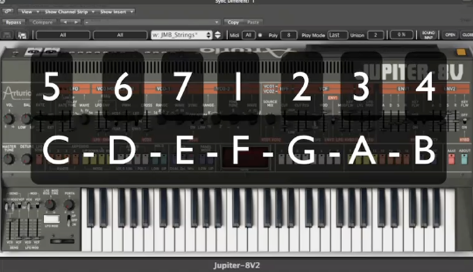
– or for example in D like pic below
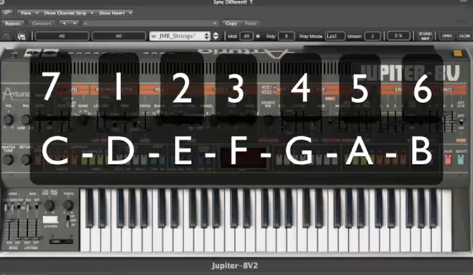
– or go further for extended chords (to the 9th) in G for example in pic below
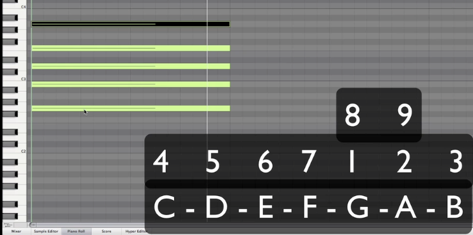
– or go further for extended chords (to the 11th) in C for example in pic below
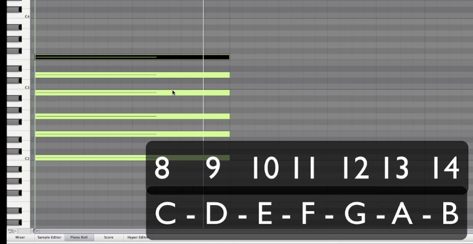
– now there is only one more interval possible in C. the 13th with the addition of A. after you will repeat note C and therefore we are 1 Octave higher as seen below
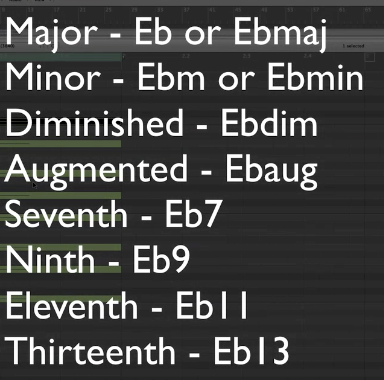
How Notes are Written (Example in E Flat)
3 Statements between 2 Chords
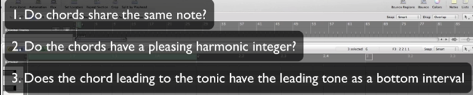
– If no Statement is True = Very little Harmonic Relationship
– If 1 Statement is True = Average Harmonic Relationship
– If 2 Statements are True = Strong Harmonic Relationship
– If All 3 Statements are True = Strongest Harmonic Relationship
1) Do the Chords share the same note?
2) Do the Chords have a Pleasing Harmonic Integer
– i.e. Ratio and Connection
– if the Root Note of one Chord is either 5 intervals Up or 4 intervals down from the Root note of the Chord that either Precedes it or follows it
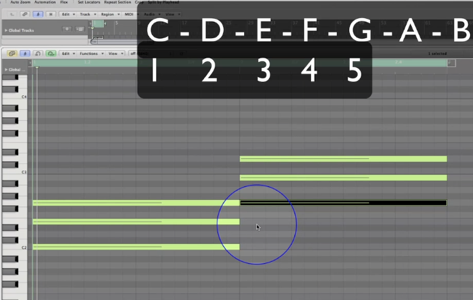
– see Pic example below from C to G where G is the 5th of CMaj Scale, this example has 2 statements
3) Does the Chord preceding the Tonic contain the Leading Tone
– Leading to the Tonic have the leading tone as a bottom Interval?
– e.g. from G to C, the B is the Outer Interval of a CMaj Scale and “needs” to be resolved to C
– Below Example has All Statements and is the V to the I Chord
Leave a Reply