
- Review Level 1
- "Blocks" in Music
- Solfege
- Minor Key Extras
- 7th Chord Extras
- Major 6 and Minor 6 Chord Extras
- Minor Scale Diatonic 7th Chord Extras
- Semi Diatonic Chords in 7th
- II to V Progression (Jazz Styled)
- Harmonic Inversion in 7th Chords
- Chord Voicing
- Chord Voicing in Major 7 Chords
- Color Tones
- All the Possible Colour Tones for 7th Chords (Key of C)
- Composition Starting Points
Review Level 1
– practice simple Major and Minor Melodies (e.g. ‚good morning to all‘ in D and then in all Keys)
– start in Sharp, e.g. Major (via C) and then Flat Majors (via F)
“Blocks” in Music
1) Top = Melody
2) Supported by Chords in the Middle
3) Beneath all is the Bass Line that holds all up
– Add Rhythm to all Blocks
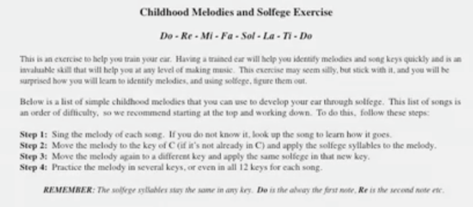
Solfege
– Helps to here exactly where we are in a Scale
– today we use Solfege in a “movable System” by always Start from Do in every other Key
– Do Di Re Ri Mi Fa Fi Sol Si La Li Ti Do (Major C-C)
– and Do Ra Re Mei Mi Fa Sei Sol Lei La Tei Ti Do (Backwards C-C)
– or Do Rei Mei Fa SolLei Tei Do (Minor C-C)
– and Do Tei Lei Sol Fa Mei Rei Do (Minor Backwards C-C)
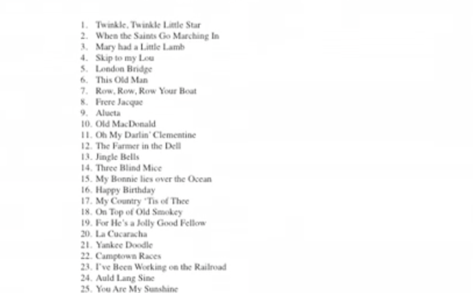
– take simple Songs and play them with the Solfege System
Minor Key Extras
– think of it as a 9 Note Scale where the first 5 Notes (C, D, Eb, F, G) are gonna be stable (same Notes as Major Scale)
– from then on we wanna be free to use all 4 possible Minor Scale Notes (Ab, A, Bb, B) in Natural (Flat 6&7), Harmonic (Flat 6) or Melodic (no Flats)
– if we talk about the “Flat 3” – its because a Chord is not build on the 3 but on the Flat 3 (Minor C,D,Eb where Eb is a Flat 3 and not the E)
7th Chord Extras
– often you hear a “Back and Forth” between Dom 7 Susp & Dom 7 in Songs for Tension
– often you hear a “Back and Forth” between a Cm7 & Gm7 (C down 2 Octaves and C3, Eb, G, Bb & inverted Gm7 with C down 2 Octaves and G3, C3, F, Bb)
– there´s also a Augmented Major 7 Chord (CMaj7+5) – build with a Aug Triad plus a Minor 3rd
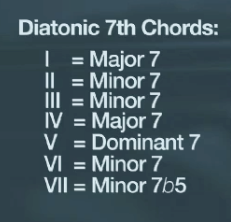
– 7th Chords in the Key of CMajor
Major 6 and Minor 6 Chord Extras
– simply add 6th to a Major or Minor Chord (C6 or Cm6)
– often used when a 3 Note Chords is a little too plain and a 7th Chord a little too much
– also used if a Note in a Melody sits up very next (which can sometimes be a little distracting)
– e.g. CMaj7th with a extra C4 in the Melody will be C3, E3, G3, B3, where B3 & C4 sit next to each other – then you may take the 6th which is a A3 instead of B3
Minor Scale Diatonic 7th Chord Extras
Possible diatonic 7th Chords in each Step of a Minor Scale
i = m7, m/Maj7, m6
o = min7b5, m7
III = Maj7, CMaj7+5 rarely used (build with a Aug Triad plus a Minor 3rd)
iv = m7, m6, Dom7
v = Dom7, m7, Dom7sus, Dom7Aug
VI = Maj7, Dom7, min7b5
VII = Maj7, Dom7, min7b5, dim7
Semi Diatonic Chords in 7th
– Flat 7 Chord and the Minor 4 Chord are not quite in the Key but used anyway often
– Flat 7 is for example a C 1st Inversion (G, C, E) but then lower the C to a Bb
– Minor 4 for example: play a I (CMaj) and then VI (FMaj) & then a F Chord 1st Inversion (C, F, A) but lower the A to a Ab and then back to I CMaj)
II to V Progression (Jazz Styled)
– Basic Form is a ii Min7th – V Dom7th – I Maj7th (ii-V-I)
Harmonic Inversion in 7th Chords
– when we put something other than the Root of the Chord in the Bass
– that would be 3rd, 5th or the 7th as a Bass Note instead of the 1
– gives a “Lack of Stability” which can help make it more Interesting
– also a Way to make a Static Chord change constantly with “Colour Tones” by just moving the Bass Note
– play a C3Maj with 1st the C2 then A1 – F1 – D1 back to C2 in the Bass
Chord Voicing
– the way we layer the Chords under the Fingers
– means Range of Keyboard, Inversions, Double the Root Note, Double the 3rd, Double the 5th
– “Open Voicing” = if you go beyond the Octave with certain Notes
– spread to Octaves above for example C3, E4, G3 – sounds more open, brighter
– spread to Octaves below for example C2, E3, G2 – sounds richer, deeper
– with the 1st Chord in a Song you “Guide” the Listener what kind of “Voicing” you are using
Chord Voicing in Major 7 Chords
– e.g. you may Take the 5th Away in a CMaj7 (as long as the 5th is Not a Flatted like Min7b5) and Play just C2, D3, B3 with added Colour Tone D4
– the “Definition” is still a Major 7 Chord without the 5th
Color Tones
– basically Notes that are added to a Triad or 7th Chord to make it more interesting, sophisticated, colourful
– require that you know the Scales & Intervals
Two Primary Rules count:
1) they are in the Key (Diatonic with a couple of Exceptions)
2) they are a Whole-Step above the Root, 3rd or 5th of the Chord
the Rule to figure out “Colour Tones” – here in the Scale of C Major:
1) bear the right Scale, Intervals and Roman Numerals in mind
2) play the correct 7th Chords
3) Colour Tones are basically added as followed – but you need to refer to the “Diatonic” Notes in Scale for every Key:
– from Root Chord a Maj2nd (or Min2nd and Minor3rd only in G) can be added = Colour Tone 9 (or also Flat9 & Sharp 9 in G)
– from 3rd Chord a Perfect 4th (or Augm 4th only in C, F,) can be added = Colour Tone 11
– from 5th Chord a Major 6th (or a Raised6th only in G) & (a Flatted 6th only in C, G) can be added = Colour Tone 13 (or also Flat13 in G)
4) in every case – if the Space is a Whole Step and the new Note is in the Diatonic Scale of the Key – the Colour Tone works 100%
5) if the Space is a Whole Step but the Note is not Diatonic Scale – it doesn’t work
6) a Perfect 4th will work in every way
All the Possible Colour Tones for 7th Chords (Key of C)
I Chord C Maj 7th
1) D (Major 2nd) is the 9th Colour Tone (Whole Step above I)
2) F (Perfect 4th) is the 11th Colour Tone (Whole Step above the 3rd) can also be a Augm4th = F#
3) A (Major 6th) is the 13th Colour Tone (Whole Step above the 5th) can also be a Flatted 6th = A
ii Chord D Min 7th
1) E (Major 2nd) is the 9th Colour Tone (Whole Step above I)
2) G (Perfect 4th) is the 11th Colour Tone (Whole Step above the 3rd)
3) B (Major 6th) is the 13th Colour Tone (Whole Step above the 5th)
iii Chord E Min 7th
– press E, G, B, D and you notice that a Whole Step above the Root is F# = out of the Scale (and F is only a Half Step above the 5th E)
– the same goes with a Whole Step above B (5th) which is a C# but also out of the Scale
– this leads us to the Fact that in Em7 only A, the 11th is a Coloured Tone which is a Perfect 5th above the Root
1) Cause the F# (Maj2nd) is Out of the Key only F is only a Half-Step above the Root
2) A (Perfect 4th) is the 11th Colour Tone (Whole Step above the 3rd)
3) Cause the C# (Major 6th) is Out of the Key only C is only a Half-Step above the 5th
IV Chord F Maj 7th
1) G (Major 2nd) is the 9th Colour Tone (Whole Step above I)
2) B (Augmented 4th) is not a Perfect 4th but a Augmented 4th therefore called a Sharp 11th Colour Tone (Whole Step above the 3rd)
3) D (Major 6th) is the 13th Colour Tone (Whole Step above the 5th)
V Chord G Dom 7th
1) A (Major 2nd) is the 9th Colour Tone (Whole Step above I)
2) C (Perfect 4th if we Suspend the Chord) is the 11th Colour Tone (Whole Step above the 3rd) = G,C,D,F instead of G,B,D,F
3) E (Major 6th) is the 13th Colour Tone (Whole Step above the 5th) can also be a Flatted 6th = A
4) you can also add another Colour Tone by Lowering the Maj2nd to a Min2nd = Ab instead of A which is then a Flat 9th
5) you can also add another Colour Tone by Raising the Maj2nd (9th) to actually a Min3rd = A# which is then a Sharp 9th (very Bluesy Scherer Style)
6) you can also add another Colour Tone by Flatten the 13th to a Eb instead of E (but take out the Original 5th = D to not have D & Eb playing together) = this is a Augmented Dom7th Chord
vi Chord A Min 7th
1) B (Major 2nd) is the 9th Colour Tone (Whole Step above I)
2) D (Perfect 4th) is the 11th Colour Tone (Whole Step above the 3rd)
3) —- cause F is only a Half-Step above the 5th and F# is Out of the Key
o Chord B Min 7th Flat 5
1) C (Flatted Maj2nd) but just next to B
2) E (Perfect 4th) is the 11th Colour Tone (Whole Step above the 3rd)
3) G (Major 6th) is the 13th Colour Tone (Whole Step above the 5th)
Composition Starting Points
1) you have a Melody – sing it and search for the Keys
2) figure out what Root/Scale the Melody belongs to (Crucial)
3) estimate possible Triads and Harmonize the Melody)
4) estimate the possible 7 Chords – add for example a Bass Note that makes up a 7 Chords with the existing Triad together
5) try also the 5 “out of Key” Notes as they may add Colour and Ideas for Changes
Leave a Reply